
How Diseases Spread
Germs that make birds sick can move quickly through a flock and between flocks. Understanding how diseases spread helps you take simple steps to block them.

Transmission Methods
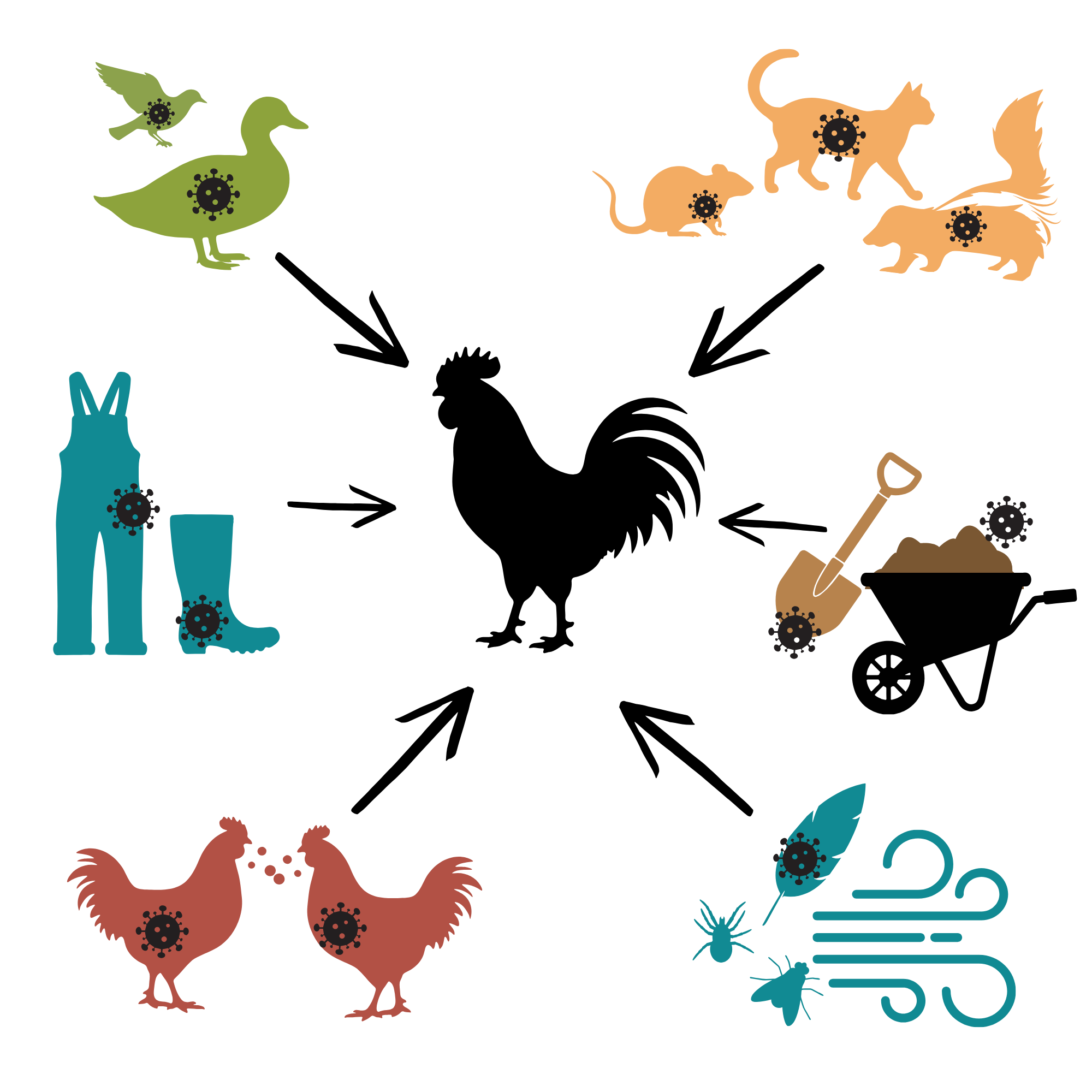
Diseases can spread to poultry through direct contact with other birds, contaminated clothing and equipment, wildlife and pests, dirty bedding or manure, insects, and contaminated air or dust particles.
Wildlife and Wild Birds
Wild ducks, geese, and songbirds often carry germs without looking sick. They contaminate feed, water, and soil through droppings.
Example: Ducks can shed avian influenza into ponds or shared water sources.
Rodents and Insects
Mice, rats, flies, and beetles spread germs on their feet and bodies. Some insects also carry parasite eggs that birds swallow while foraging.
Example: Darkling beetles can carry roundworm eggs, which infect birds when eaten.
Dirty Environments
Manure, soiled bedding, and contaminated feed or water can carry germs. Healthy birds become sick when they peck at droppings, scratch in dirty litter, or drink contaminated water.
Example: Avian influenza and coccidiosis can spread through droppings and can survive in wet litter or damp environments.
Airborne Spread
Some germs travel short distances in the air through droplets, dust, or feather dander. Poor ventilation and crowded housing make this type of spread worse.
Example: Infectious bronchitis virus spreads when sick birds cough or sneeze.
Bird-to-Bird Contact
Sick birds spread germs directly to healthy birds through close contact, especially when eating, drinking, or roosting together. Flocks that mix species or ages have even higher risk.
Example: A chicken carrying Mycoplasma can infect other chickens, turkeys, or gamebirds in the same farm.
People and Equipment
Germs can hitchhike on boots, clothing, hands, tools, and even vehicles. Moving between coops or farms without cleaning or changing spreads germs from one flock to another.
Example: Wearing the same shoes in your flock after visiting another farm can carry bacteria or viruses such as Marek’s disease, which survives in feather dander and dust and can be tracked in on clothing or equipment.