
Marek’s Disease
Learn how Marek’s spreads, the signs to watch for, and steps you can take to protect your birds.

Quick Facts
 Marek’s disease is caused by a transmissible herpesvirus
 Can cause severe illness and sometimes death in chicken flocks
 Infections are rare in turkeys and game birds
 Does not spread to or infect humans
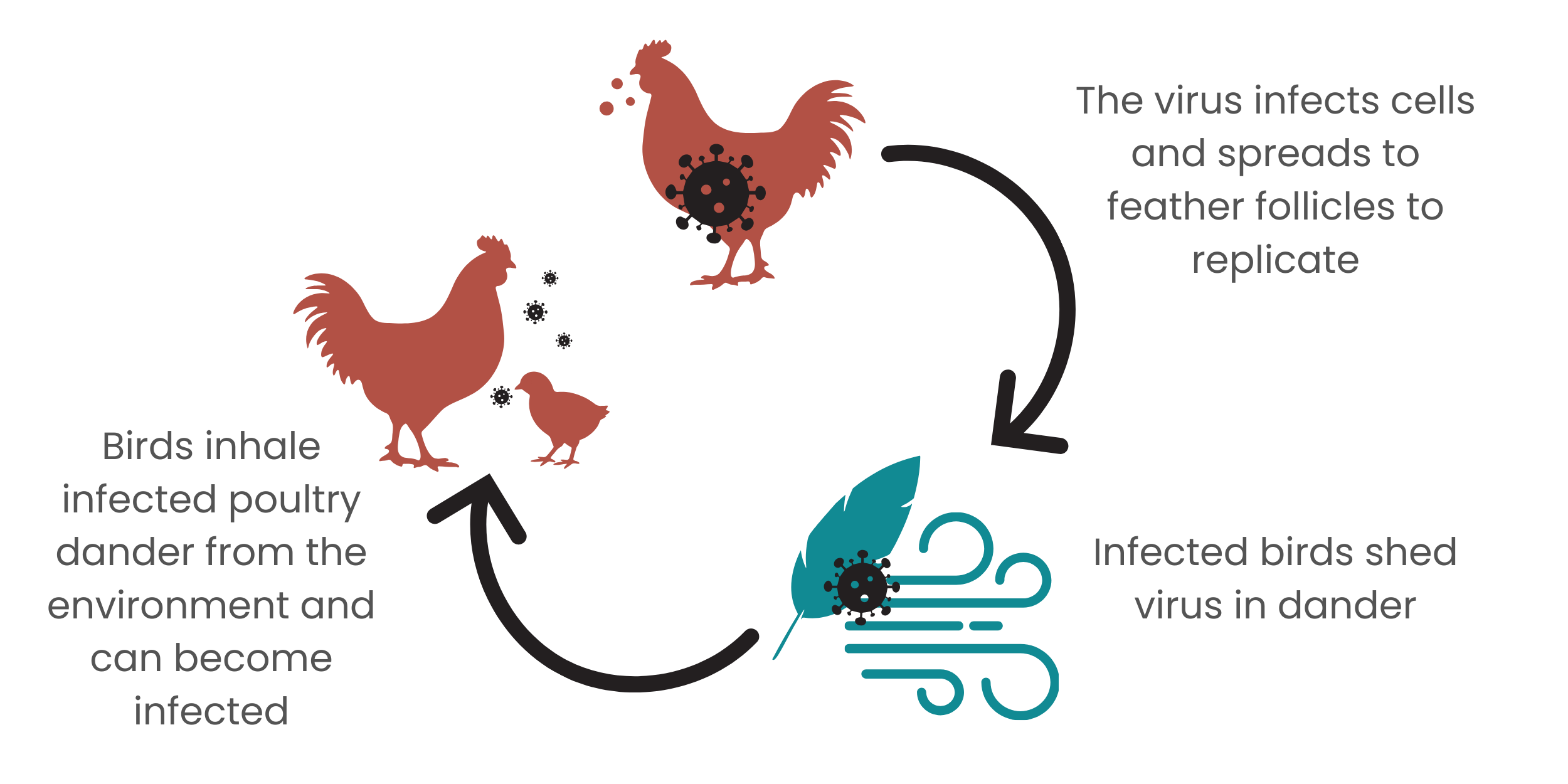
 Spreads easily and survives for months in dust, feather dander, coops, and equipment
What is Marek’s Disease?
Marek’s Disease (MD) is a herpesvirus that causes lymphoproliferative disease in chickens, triggering uncontrolled growth of white blood cells (lymphocytes). The virus concentrates in feather follicles, spreads through feather dander, and can survive for months in bedding and on coop surfaces. Infected birds may develop paralysis, weight loss, or tumors, depending on how the disease progresses. Mortality can be high in unvaccinated flocks. Infected birds can shed the virus for life, making it hard to control. Buy vaccinated chicks from trusted sources. Strong biosecurity and vaccination give the best protection.
 There is no cure and Infected birds may die or become life-long carriers and continue to shed the virus.
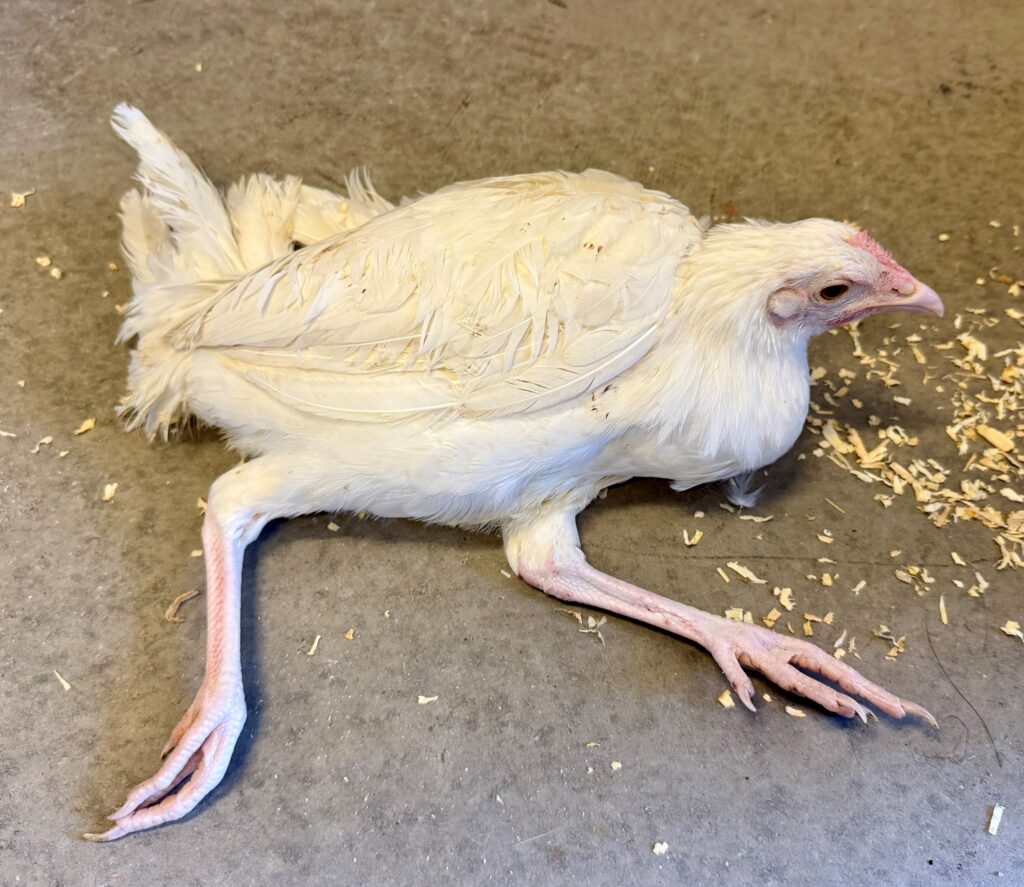
Signs of Marek’s
Four Forms of Marek’s:
Marek’s disease can show up in different forms, or ways the disease affects the bird’s body. These forms are the most common.
- Nerve Form: Leg or wing paralysis (legs often in a “splits” position), trouble standing or breathing.
- Skin Form: Swollen or scabby feather follicles.
- Eye Form: Cloudy or misshapen iris, uneven pupils, vision loss. Change in eye color.
- Organ Form: Tumors in the liver, heart, kidneys, or other organs, causing weight loss and death.

How does Marek’s Spread?
Bird-to-bird (direct transmission)
- Birds inhale virus particles from dust or dander in the air.
- Close contact spreads the virus quickly within a flock.
- Once infected, birds continue shedding virus for life.
Dust, dander, and surfaces (indirect transmission)
- Infected birds shed virus into feather dust and dander.
- Virus-laden dust and litter can persist in poultry houses for long periods.
- People, clothing, shoes, equipment, or coop materials can move the virus between flocks.
Hen to egg and chick (vertical transmission)
- This disease does not pass from hen to egg.
How Do You Treat Marek’s?
There is no cure for Marek’s disease. Once a bird is infected, it will carry the virus for life. The best way to protect your flock is through prevention.
How Do You Prevent Marek’s?
- Buy vaccinated chicks: Get birds from trusted sources that vaccinate. Vaccines help protect against illness, but birds may still get infected or spread the virus.
- Practice biosecurity: Limit contact with outside birds, wear coop-only shoes, wash hands and equipment, and restrict visitors (require boot covers).
- Separate new birds: Isolate new or returning birds for at least 3 weeks, since germs can spread before birds show signs.
- Handle healthy birds first: Care for birds in this order—young, then adults, then sick—to avoid spreading germs. Wash or sanitize hands and equipment between groups.
What Do You Do if Marek’s is Found in Your Flock?
- Work with a veterinarian: Marek’s is usually confirmed by necropsy on a freshly dead bird at a veterinary lab. A veterinarian can guide you on next steps.
- Isolate sick birds: Separate affected birds from the flock. Marek’s spreads quickly, and others may already be exposed.
- Don’t spread disease: Avoid buying or selling birds during or after an outbreak, since even healthy-looking birds can shed the virus.
- Clean and disinfect coop area: Remove feathers, dust, manure, and bedding, then disinfect the coop, boots, equipment, and surfaces.
- Manage the flock long-term: Keep the flock closed. If adding birds, vaccinate and isolate them first. Reduce stress from crowding, poor hygiene, or mixing ages to lessen the impact of illness.